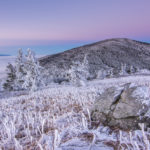
Fireflies are a hallmark of summer in Western North Carolina, lighting up the mountain skies on warm evenings. But witnessing the rare blue ghost fireflies or synchronous fireflies is pure magic. For just a few weeks each year, these species create a truly mesmerizing experience you won’t forget. We’re sharing the best firefly viewing spots in Western North Carolina, ideal timing for blue ghost fireflies and synchronous fireflies, and tips for planning your firefly viewing adventure.
Key Takeaways
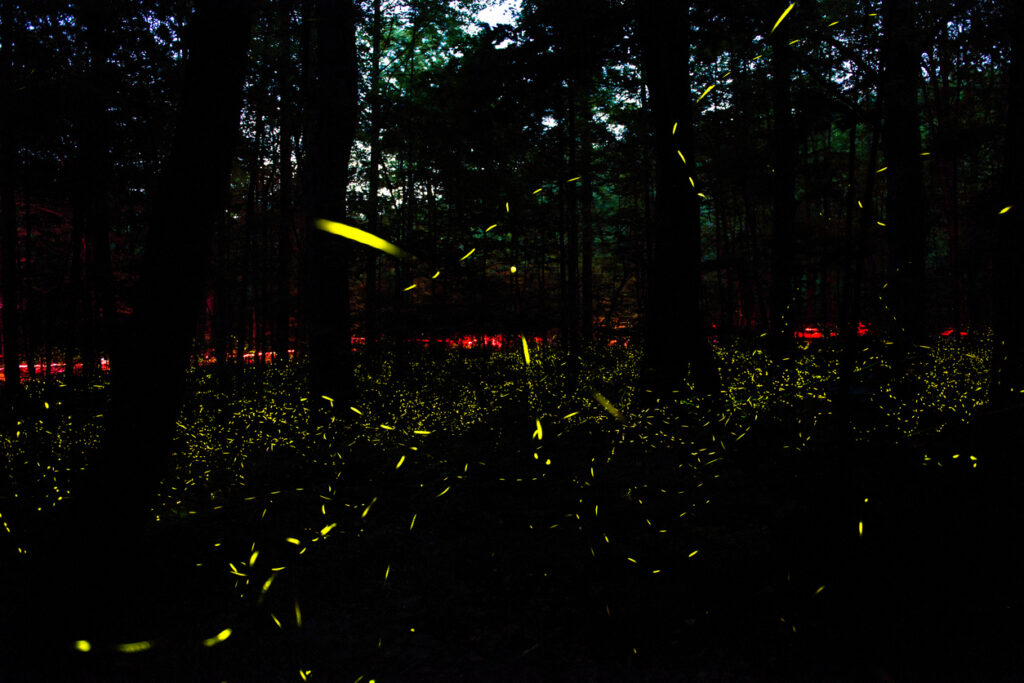
- Western North Carolina is home to many firefly species, including rare blue ghost fireflies and synchronous fireflies.
- Blue ghost fireflies glow continuously near the forest floor, while synchronous fireflies flash in coordinated patterns.
- Peak viewing is after sunset starting in late May through mid-June, with ideal conditions including warm, humid nights and low moonlight.
- Top viewing locations include Pisgah National Forest, DuPont State Recreational Forest, Great Smoky Mountains National Park, and Nantahala National Forest, with some areas requiring advance lottery entry for access.
Fireflies in WNC
North Carolina is home to 30-40 species of fireflies, making it one of the most diverse places in the U.S. to experience them. While the familiar glow of backyard fireflies is a staple of summer, Western North Carolina is also known for two unique species—the blue ghost fireflies, which emit a soft, continuous glow, and the synchronous fireflies, which flash in perfect unison. Their appearances are brief and highly anticipated each year.
Blue Ghost Fireflies
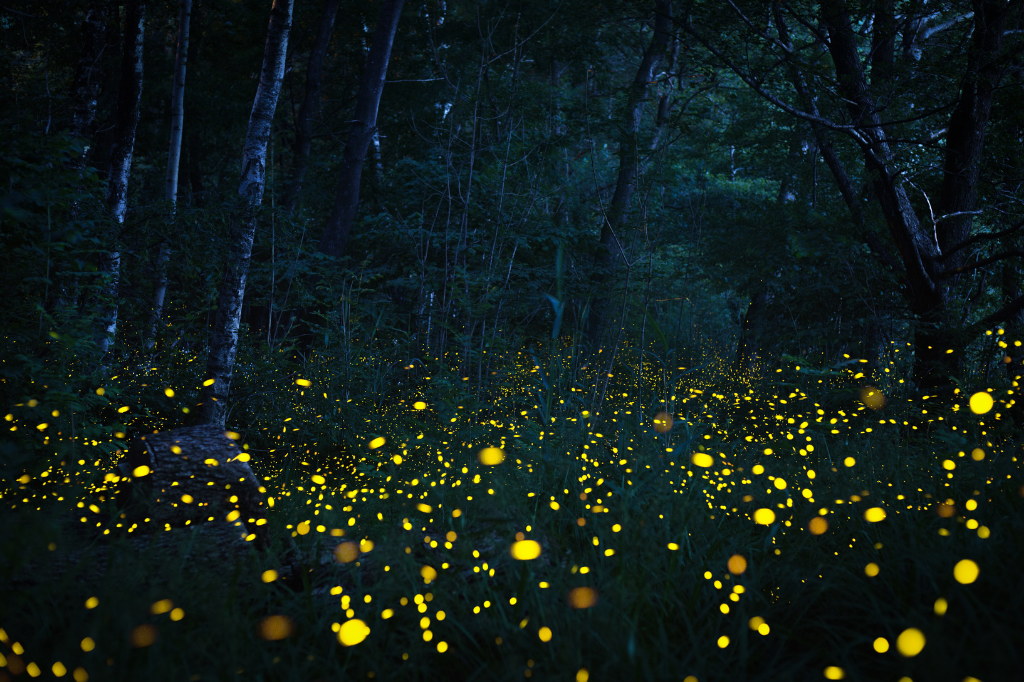
Blue ghost fireflies (Phausis reticulata) are one of the most unique and sought-after natural phenomena in Western North Carolina. Unlike traditional fireflies that blink on and off, these rare insects emit a continuous, soft blue-white glow that can last several seconds, creating an almost floating, ethereal effect in the forest. Males hover low above the forest floor with a steady glow, while females remain on the ground, emitting a faint light from the leaf litter.
Native to the Southern Appalachian Mountains, the largest population of blue ghost fireflies are in Western North Carolina, making sightings especially special for visitors to the Asheville area. Their appearance is brief—typically lasting just a few weeks each year—and they rely on very specific conditions like moist, undisturbed forests and minimal artificial light. Because of their rarity and sensitivity to environmental changes, conservation efforts and responsible viewing are key to preserving their habitat.
Where to See Blue Ghost Fireflies
Pisgah National Forest
Pisgah National Forest’s lower elevation valleys and areas near water sources provide a favorable habitat for blue ghost fireflies. Trails like Pink Beds Loop and Sycamore Flats offer perfect conditions, with a mix of wetlands and dense forest cover. For a more guided experience, FIND Outdoors hosts ticketed blue ghost firefly tours in May and June at the Cradle of Forestry. These tours help protect the habitat while giving visitors a reliable way to experience the fireflies up close.
DuPont State Recreational Forest
One of the most popular places to see blue ghost fireflies, DuPont State Recreational Forest offers a network of trails near streams and waterfalls where these insects thrive. Search areas like Hooker Falls, where heavy, damp leaf litter creates the ideal environment for their hunting grounds and nursery. Since these fireflies stay close to the forest floor and do not repopulate quickly, staying on the trail is critical to avoid disturbing their fragile environment.
Grandfather Mountain
Grandfather Mountain offers a unique high-elevation setting to experience blue ghost fireflies, along with several other bioluminescent species, including synchronous fireflies. The park hosts limited, ticketed viewing events known as “Grandfather Glows,” via a lottery system. These events are timed around peak activity and guests are provided with red flashlights, helping to protect the habitat alongside the opportunity to witness this unique natural phenomena.
Cataloochee Valley (Great Smoky Mountains National Park)
Located within the Great Smoky Mountains National Park, Cataloochee Valley is renowned for its diverse wildlife and rich history. In addition to spotting elk and other wildlife, lucky visitors may catch a glimpse of blue ghost fireflies illuminating the valley after sunset. Its quiet, undisturbed setting makes it a great option for those seeking a more secluded viewing experience.
Private Guided Tours
Exploring blue ghost fireflies on private property can offer a quieter, less crowded experience, and there are several options throughout Western North Carolina. Asheville Wellness Tours offers a 3-hour guided night hike or an overnight firefly retreat, both with private access to 900 acres of protected forest. Nature For My Soul provides an intimate experience at a private residence just 15 minutes from Biltmore Park Town Square in South Asheville. Tuxedo Falls is a luxury camp in Zirconia, creating an exclusive experience on private land.
When to See Blue Ghost Fireflies
Blue ghost fireflies typically appear from mid-May through early June, with peak activity depending on weather conditions like temperature and humidity. Their mating season is short, lasting only a few weeks each year, which makes timing especially important for a successful viewing experience. They are most active when the forest is fully dark and conditions are warm and humid, from about 9pm to 10:30pm, usually disappearing by midnight. For the best visibility, nights with little to no moonlight are ideal, as darkness allows their soft glow to stand out more clearly.
Synchronous Fireflies
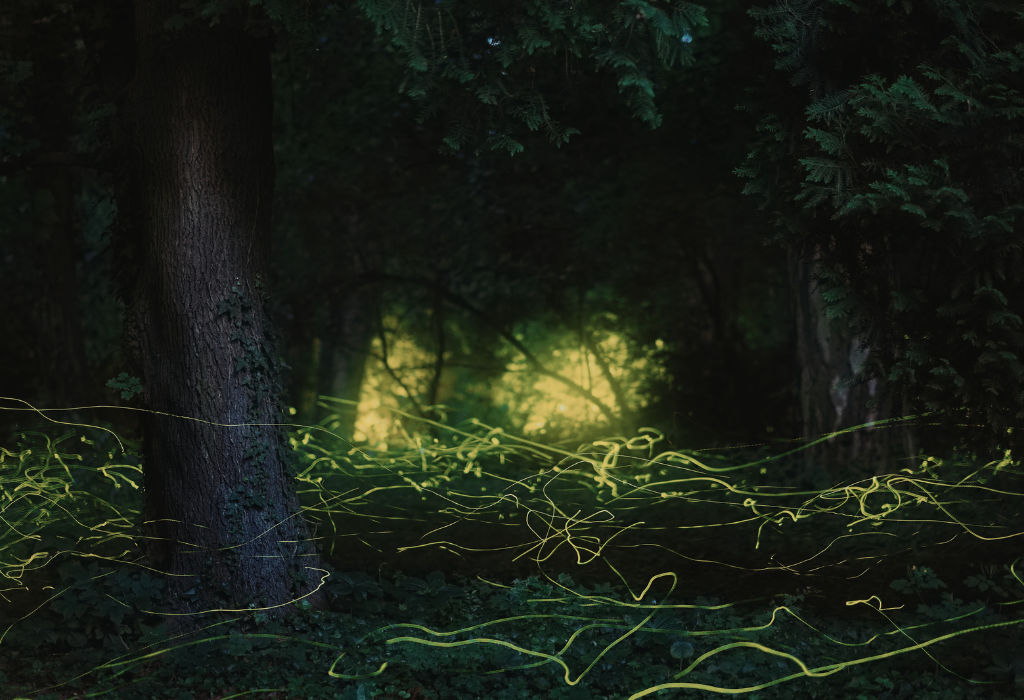
Synchronous fireflies are one of nature’s most fascinating light displays, known for their ability to flash in near-perfect unison. Unlike typical fireflies that blink randomly, these species coordinate synchronized signals as part of a mating ritual. This unique behavior is found in only a few places in the world, making it a bucket-list experience for many visitors.
In North America, the most well-known species is Photinus carolinus, found in the Southern Appalachian region. While synchronous fireflies do exist in other parts of the world, they are far less common in the United States. This makes Western North Carolina and the surrounding Appalachians a popular region for viewing.
Where to See Synchronous Fireflies
Great Smoky Mountains National Park (Elkmont)
The most well-known location to see synchronous fireflies in North America, Elkmont hosts an annual viewing event managed by the National Park Service. Due to high demand, access is controlled through a lottery system, which usually opens in late April. Selected applicants may purchase a parking pass and receive a designated viewing date, and those who don’t secure a spot can explore alternative guided tours or locations nearby.
Nantahala National Forest & Joyce Kilmer Memorial Forest
For a truly immersive and less trafficked experience, parts of Nantahala National Forest offer prime viewing spots for synchronous fireflies. Joyce Kilmer Memorial Forest is a noteworthy location to see synchronous fireflies without the need for a lottery. This old-growth forest features towering trees, lush understory, and minimal light pollution, providing ideal conditions for the fireflies’ coordinated flashes.
Rocky Fork State Park (Tennessee)
Just over the state border in eastern Tennessee, Rocky Fork State Park provides a less crowded experience for those willing to explore. Its remote setting and dense forest make it a promising spot for spotting synchronous fireflies within 2,076 acres of scenic wilderness. A lottery is usually available in early May, with only 10 applicants per night selected for six viewing dates. Winners are responsible for a $50 vehicle pass for up to six passengers.
Congaree National Park (South Carolina)
Located less than 3 hours from Asheville, Congaree National Park offers one of the Southeast’s lesser-known synchronous firefly displays, Photuris frontalis (Snappy Syncs), which produce a faster, more rapid flashing pattern. The park hosts its own lottery event, closing areas of the park to all other visitors at 4:30pm on event evenings.
When to See Synchronous Fireflies
Similar to the blue ghost fireflies, synchronous fireflies typically appear in late May through mid-June, with peak activity lasting only a couple of weeks each year. They are most active shortly after sunset, usually beginning about 30 minutes after dusk and continuing for a few hours into the night. Warm, humid evenings following rainfall are favorable for producing the best displays, but because this is tied closely to environmental conditions, even small changes in weather can impact timing and intensity.

Tips for Seeing Fireflies in WNC
Catching a firefly display—especially rare species like synchronous fireflies or blue ghost fireflies—requires a bit of planning and patience. These insects are sensitive to light and environmental changes, so being prepared can make all the difference in your experience. With the right timing and conditions, you’ll help protect these unique species while being rewarded with one of the most magical natural displays in Western North Carolina.
- Limit artificial light: Avoid flashlights, phone screens, and camera flashes; if needed, use a red-filtered light.
- Arrive before dark: Give your eyes time to adjust for better visibility.
- Stay on designated trails: Protect fragile habitats, especially since many fireflies live close to the ground.
- Be patient: Activity can ebb and flow, so give it time once you’re in place.
- Check timing and weather: Warm, humid nights with little moonlight offer the best conditions.
- Respect the environment: Avoid catching fireflies or disturbing their habitat to help preserve future populations.
Bottom Line
Firefly season is just one of the many reasons people fall in love with Western North Carolina. There’s something special about living where experiences like this are right outside your door. Let Altamont Property Group help you find your place in Asheville or right in the heart of outdoor adventure in Transylvania County.
Fireflies in NC FAQ
What’s the best time of year to see fireflies in WNC?
Firefly season in Western North Carolina usually peaks from late May to early June, with exact timing depending on weather conditions and elevation. This is when both common fireflies and rare species are most active.
How many species of fireflies are in NC?
Out of about 2,000 firefly species worldwide, 30–40 can be found in North Carolina, with 19 found right here in Western North Carolina.
How long do fireflies survive in a jar?
Fireflies are delicate insects and generally only survive a limited time in a jar, especially without proper ventilation and humidity. Releasing them shortly after catching helps protect local firefly populations.
Can you see fireflies in your backyard?
Yes, you can often see fireflies in backyards throughout North Carolina. Creating a natural habitat with low light pollution and native plants can increase your chances of seeing them.
Are there other places in the world to see synchronous fireflies and blue ghost fireflies?
Synchronous fireflies can be found in a few locations throughout the U.S., though sightings are less common outside of the South Appalachian region. Internationally, synchronous fireflies appear in Mexico and Southeast Asia, where they are more common. Blue ghost fireflies, however, are only found in the Southern Appalachians, making Western North Carolina one of the few places to experience both.