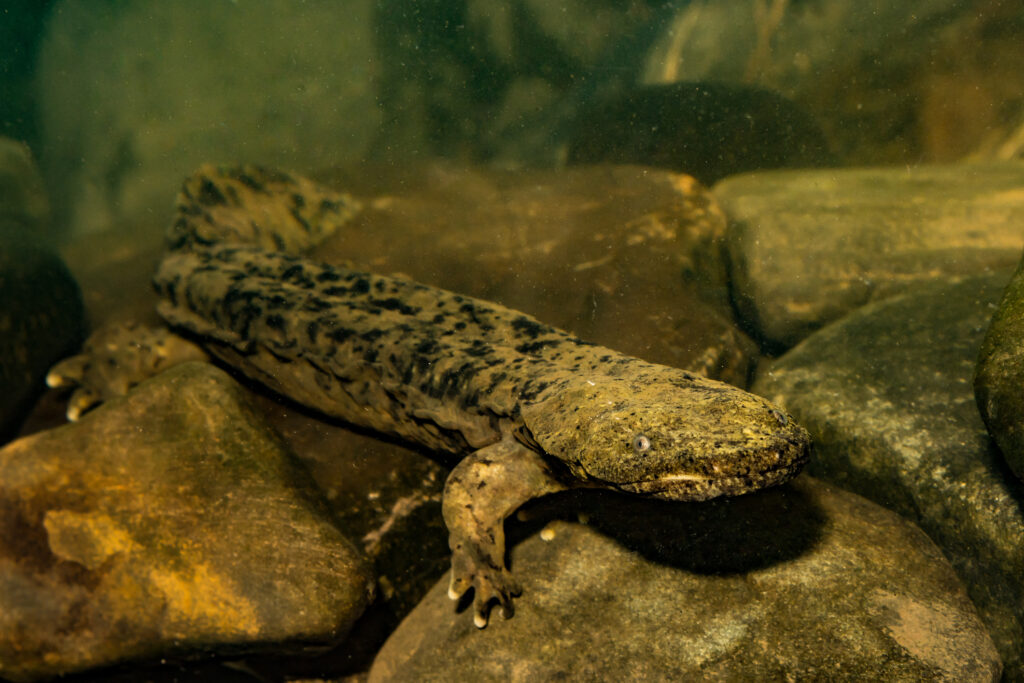
Eastern hellbenders—often called “snot otters,” “water dogs,” or “Allegheny alligators”—have long been a mysterious and essential part of the Appalachian mountain ecosystem. These giant salamanders, which can grow up to two feet long and live for over 30 years, are native to the clean, fast-flowing rivers and streams of the eastern U.S., especially those in the Blue Ridge Mountains of Western North Carolina. Known as an indicator species, their presence signals healthy, unpolluted waterways. But even before Hurricane Helene, hellbenders were in serious decline due to sedimentation, riverbank erosion, dam construction, and poor water quality.
By 2024, only 12% of hellbender populations were successfully reproducing in the wild. In Western North Carolina, researchers and wildlife managers had been working to stabilize these populations through habitat restoration and the installation of artificial nesting sites. Despite these efforts, hellbenders remained under threat—often invisible victims of human land use and climate shifts.
Then came Hurricane Helene in September 2024. The storm dumped torrential rain across the Southern Appalachians, sending flash floods and sediment-laden waters crashing through riverbeds. Nests were buried or swept away, eggs destroyed, and adult hellbenders displaced from their territories. In North Carolina, researchers found hellbenders in backyards and basements, miles from their original habitat. Rivers that once offered the perfect conditions for breeding and shelter were filled with silt, debris, and storm runoff. The damage from Helene has set back years of slow, steady conservation progress.
In response, the U.S. Fish and Wildlife Service has proposed upgrading the eastern hellbender’s status to “endangered” under the Endangered Species Act. This would unlock vital funding and protections aimed at safeguarding remaining populations. Local conservation groups, including those in Asheville and the broader WNC region, are also stepping up efforts to rebuild nesting habitats and monitor the health of rivers. Artificial nest boxes, streambank stabilizations, and community outreach programs are now critical components of recovery.
The hellbender is more than a curiosity of the Southern Appalachians—it’s a keystone of the mountain ecosystem and a symbol of the region’s deep connection to its rivers. For those of us in Western North Carolina, helping the hellbender recover means preserving the integrity of our environment, our water, and the natural heritage that defines our mountain communities.
How You Can Help:
- Report sightings to local wildlife authorities.
- Support conservation groups working on water quality and habitat restoration.
- Avoid disturbing streambeds and nesting areas while hiking, swimming, or paddling.
Protecting the hellbender helps protect the rivers we all depend on. With patience and persistence, these ancient salamanders might still have a future in our mountain streams.
👉 Read more from U.S. Fish and Wildlife
👉 Explore PBS NC’s coverage
👉 Southeastern Environmental Law Center on the crisis