Western North Carolina is known for its scenic mountain drives, lush forests, and crystal-clear streams, but it’s also home to an extraordinary variety of native wildlife. The region’s diverse elevations and habitats support countless species that have inhabited these mountains for thousands of years, creating one of the richest ecosystems in the eastern United States.
Today, residents and visitors alike can spot everything from soaring birds of prey and elusive bobcats to vibrant salamanders and native trout. While some species are commonly seen throughout the region, others are found only in the Southern Appalachian Mountains. Together, they contribute to the ecological richness that makes Western North Carolina such a unique place to live and explore.
Key Takeaways
- WNC is one of the most biodiverse regions in the country, supporting hundreds of native wildlife species.
- Native wildlife in WNC plays a vital role in healthy ecosystems.
- Living in WNC means sharing the landscape with remarkable native wildlife.
Mammals Native to NC
Western North Carolina is home to an incredible variety of native mammals, thanks to the region’s rich mix of forests, rivers, mountain balds, and protected wilderness areas. Many of the mammals found here thrive in national forests, state parks, and remote backcountry areas, but some can also be spotted surprisingly close to towns and neighborhoods. Whether you’re hiking scenic trails, exploring local rivers, or simply enjoying a quiet morning in the mountains, seeing wildlife is a common experience throughout much of Western North Carolina.
White-Tailed Deer
The white-tailed deer is one of the most commonly spotted mammals in North Carolina and are especially active during the early morning and evening hours. Deer play an important role in the local ecosystem and are often seen grazing in open meadows, forest edges, and even residential areas near wooded land.
Where to Spot: Along the Blue Ridge Parkway, in open fields near Asheville, throughout Pisgah National Forest, and in rural mountain communities.
Black Bears
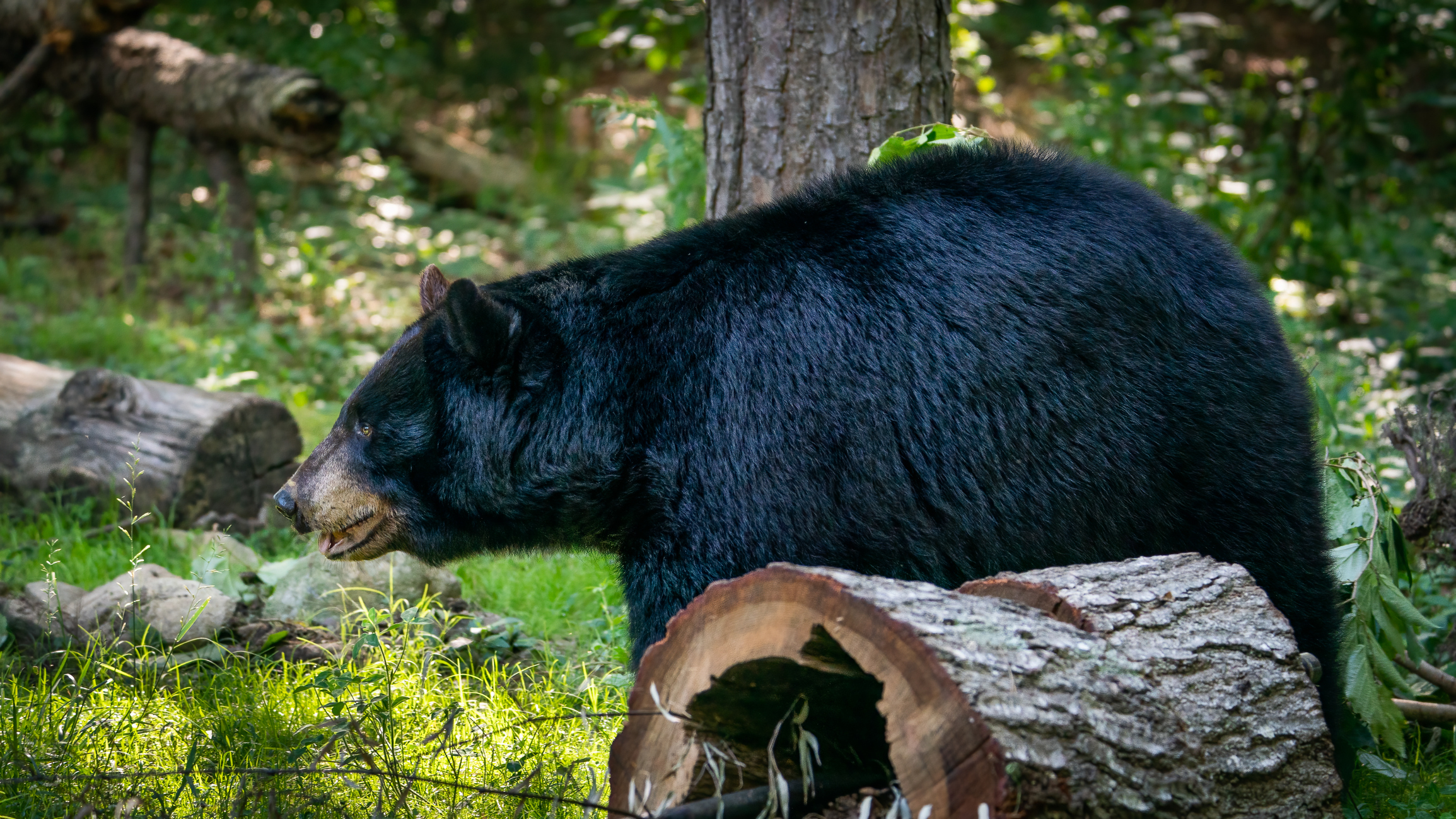
Western North Carolina is home to one of the largest black bear populations in the eastern United States, and sightings have become increasingly common in both remote wilderness areas and mountain towns. Despite their large size, black bears are generally shy and prefer to avoid people, spending much of their time foraging for berries, nuts, insects, and plants throughout the forests.
Where to Spot: Great Smoky Mountains National Park, Pisgah National Forest, the Asheville area, and around higher-elevation forested regions.
American River Otters
River otters are energetic, semi-aquatic mammals often spotted swimming, sliding along muddy banks, or hunting fish in mountain streams. These animals are considered a keystone species, meaning they play a vital role in supporting healthy ecosystems and balanced food chains in North Carolina’s waterways. Once nearly eliminated from North Carolina due to habitat loss and trapping, river otters have made a strong comeback thanks to conservation efforts.
Where to Spot: French Broad River, Davidson River, New River, and quiet waterways throughout Western North Carolina.
Eastern Elk
Elk were once native to North Carolina but disappeared from the region in the late 1700s due to overhunting and habitat loss. Today, thanks to successful reintroduction efforts, elk have returned to parts of the Smoky Mountains and have become one of the most exciting wildlife sightings in the state. These massive animals can weigh several hundred pounds and are especially impressive during the fall rutting season, when males bugle loudly through the valleys.
Where to Spot: Cataloochee Valley and the Oconaluftee area in Great Smoky Mountains National Park.
Beavers
Beavers play an important role in North Carolina’s ecosystems by building dams and lodges that create wetlands supporting fish, birds, amphibians, and countless other species. After being over-trapped for their fur and disappearing from the state by the late 1800s, beavers were reintroduced in the 1930s through conservation efforts led by the NC Wildlife Resources Commission. Today, beavers can be found in many North Carolina watersheds, where their dam-building activities help slow erosion, improve water retention, and create valuable wildlife habitat.
Where to Spot: Wetlands, ponds, and slow-moving streams throughout Pisgah National Forest and mountain river valleys.
Bobcats
Bobcats are the only wild cat species native to North Carolina and are rarely seen, quietly moving through dense forests and rocky mountain landscapes. They are skilled hunters that prey on rabbits, rodents, birds, and other small animals. About twice the size of a house cat and weighing between 15-30 lbs, bobcats are distinguishable by their short “bobbed” tails, spotted coats, and tufted ears.
Where to Spot: Dense forests, remote hiking areas, and protected wilderness regions throughout Western North Carolina.
Gray Foxes
Both red foxes and gray foxes can be found in North Carolina, although gray foxes are the state’s only native fox species. They are well adapted to the forests and mountains of Western NC and are especially unique because of their ability to climb trees, which is a rare trait among canines. Gray foxes are highly adaptable and primarily nocturnal, though they are occasionally spotted during daylight hours near wooded neighborhoods, trails, and quiet rural areas.
Where to Spot: Forest edges, wooded mountain neighborhoods, hiking areas, and rural landscapes throughout Western North Carolina.
Other Mammals Native to North Carolina
- Coyotes
- Raccoons
- Virginia Opossums
- Eastern & Appalachian Cottontail Rabbits
- Gray, Red, and Flying Squirrels
- Eastern Chipmunks
- Groundhogs (Woodchucks)
- Striped & Eastern Spotted Skunks
- Long-Tailed & Least Weasels
- American Minks
- Muskrats
- Bats (17 native species)
Reptiles and Amphibians in NC
Western North Carolina is one of the most biologically diverse regions in the United States, especially when it comes to reptiles and amphibians. The area’s cool mountain streams, dense forests, wetlands, and rocky habitats provide ideal conditions for a remarkable variety of species. In fact, the Southern Appalachian Mountains are considered a global hotspot for salamander diversity. From tiny tree frogs calling on warm summer nights to turtles sunning along riverbanks, reptiles and amphibians are an important part of the region’s ecosystems and are often indicators of healthy waterways and forests.
Salamanders
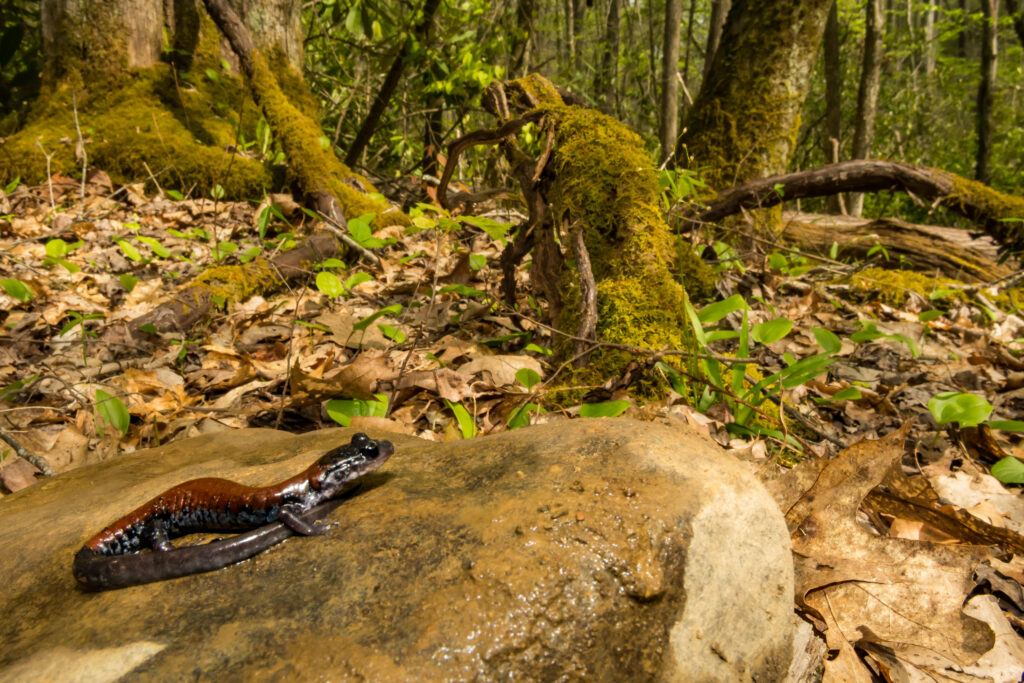
Western North Carolina is known for its incredible salamander diversity, with dozens of species living throughout the mountains. Salamanders thrive in the region’s cool, moist forests and clean streams, where they feed on insects and help maintain balanced ecosystems. Species range from fully aquatic salamanders to lungless woodland varieties that breathe directly through their skin. Their sensitivity to pollution and environmental change also makes them important indicators of ecosystem health.
Where to Spot: Along shaded hiking trails, beneath logs and rocks, near mountain streams, and throughout Great Smoky Mountains National Park and Pisgah National Forest.
Common Species:
- Eastern Hellbender
- Spotted Salamander
- Marbled Salamander
- Eastern Newt
- Red Salamander
- Slimy Salamander
- Mudpuppy
Lizards
Several native lizard species can be found throughout North Carolina, especially in sunny forests, rocky outcrops, and suburban gardens. Most are small, fast-moving reptiles that help control insect populations by feeding on beetles, spiders, ants, and other pests. Lizards are cold-blooded and are most active during warm weather, often basking on rocks, logs, or fences to regulate their body temperature.
Where to Spot: Rocky trails, forest clearings, sunny backyards, and wooded areas throughout Western North Carolina.
Common Species:
- Five-Lined Skink
- Broad-Headed Skink
- Eastern Fence Lizard
- Green Anole
- Ground Skink
Snakes
North Carolina is home to a wide variety of snake species, the vast majority of which are nonvenomous and harmless to humans. Snakes play a vital role in the ecosystem by helping control rodent and insect populations while also serving as prey for larger wildlife. In Western North Carolina, snakes can be found in forests, wetlands, grasslands, and near waterways. While some species are shy and rarely seen, others may occasionally cross hiking trails or sun themselves on warm rocks.
Where to Spot: Forest edges, rocky mountain slopes, wetlands, hiking trails, and areas near streams and rivers.
Common Species:
- Black Rat Snake
- Eastern Kingsnake
- Northern Water Snake
- Garter Snake
- Eastern Hognose Snake
- Copperhead (V)
- Timber Rattlesnake(V)
Turtles

North Carolina’s native turtles include both aquatic and land-dwelling species that inhabit rivers, ponds, wetlands, and forests throughout the mountains. Turtles are long-lived reptiles that play important ecological roles by helping maintain healthy aquatic environments and dispersing seeds throughout wetland ecosystems. Aquatic turtles are often seen basking on logs or rocks, while terrestrial species quietly roam forest floors searching for insects, berries, and mushrooms.
Where to Spot: Rivers, ponds, wetlands, slow-moving streams, and forested areas throughout Western North Carolina.
Common Species:
- Eastern Box Turtle
- Painted Turtle
- Common Snapping Turtle
- River Cooter
- Musk Turtle
- Yellow-Bellied Slider
Frogs and Toads
Few sounds are as closely associated with warm North Carolina nights as the calls of frogs and toads. While frogs typically have smooth skin and stay closer to water, toads are more terrestrial and have dry, textured skin, thriving in forests, fields, and even backyards. Both play an important role in the ecosystem by helping control insect populations and serving as food for larger wildlife. Because amphibians are highly sensitive to environmental changes, healthy frog and toad populations are often signs of clean water and balanced ecosystems.
Where to Spot: Wetlands, ponds, marshes, forest pools, hiking trails, gardens, and near streams during spring and summer evenings.
Common Species:
- American Toad
- Spring Peeper
- Green Frog
- Bullfrog
- Pickerel Frog
- Gray Treefrog
- Wood Frog
Native Birds in WNC
Western North Carolina’s wide range of habitats include high-elevation spruce-fir forests, hardwood coves, rivers, wetlands, and open farmland, making it home to an impressive diversity of bird species. The region sits along major migratory flyways, meaning birdlife changes throughout the seasons as both year-round residents and seasonal migrants pass through. Birds contribute to healthy ecosystems in countless ways, from regulating insect populations to helping forests regenerate through seed dispersal. For residents and visitors alike, birdwatching provides an opportunity to observe these important species while enjoying the region’s natural diversity.
Great Blue Heron
The great blue heron is one of the most recognizable wading birds in North Carolina, often seen standing motionless along rivers and lakes as it hunts for fish. With its tall stature, long neck, and slow, deliberate movements, this bird is a master of patience and precision. Great blue herons are commonly found in both natural and human-made waterways and are especially active in the early morning and evening hours.
Where to Spot: Along the French Broad River, Lake Lure, beaver ponds, reservoirs, and quiet stretches of mountain streams throughout Western North Carolina.
Eastern Screech Owl
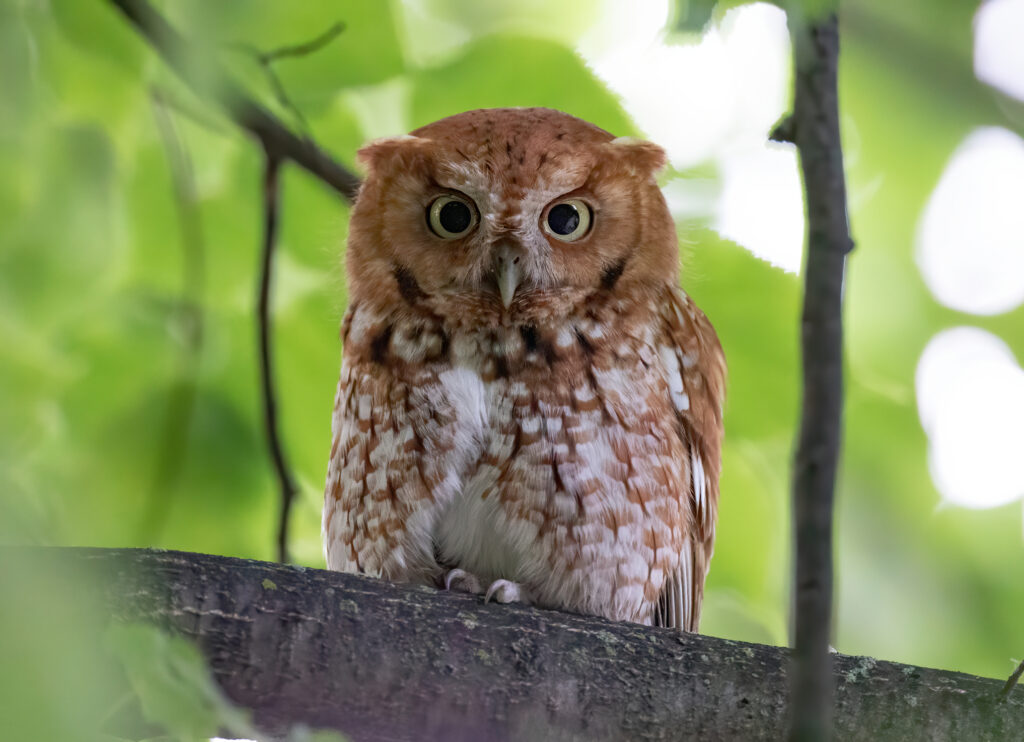
The eastern screech owl is a small but highly adaptable nocturnal raptor found throughout forests, suburbs, and rural woodlands. Despite its name, it does not actually “screech” but instead produces soft trills and whinnies that are often heard at night. These owls are excellent at camouflage, blending seamlessly into tree bark, making them difficult to spot even when nearby.
Where to Spot: Hollow trees in wooded neighborhoods, forest edges, parks, and mature hardwood forests across Western North Carolina.
Wild Turkey
Wild turkeys are large ground-dwelling birds commonly found throughout North Carolina’s forests and fields. Once nearly wiped out in many areas due to overhunting and habitat loss, conservation efforts have helped restore their populations across the state. They are social birds often seen in flocks, especially in the fall and winter months, and are known for their distinctive gobbles during mating season.
Where to Spot: Forest edges, open fields, rural farmland, and along wooded roads throughout Western North Carolina.
Red-Tailed Hawk
The red-tailed hawk is one of the most common and widespread birds of prey in North America, often seen soaring high above open landscapes in search of prey. Recognizable by its broad wings and distinctive reddish tail, this raptor plays an important role in controlling rodent populations. It is frequently seen perched on fence posts, tree limbs, or roadside poles scanning the ground below.
Where to Spot: Open fields, highway corridors, forest edges, and mountain ridgelines throughout Western North Carolina.
Additional Native Birds of Western North Carolina
Western North Carolina is also home to a wide range of other bird species, from songbirds to raptors, including:
- Songbirds: American Robin, Carolina Wren, Northern Cardinal, Blue Jay, Eastern Bluebird, Cedar Waxwing, Tufted Titmouse, and Black-capped Chickadee
- Woodpeckers: Pileated Woodpecker, Red-bellied Woodpecker, and Downy Woodpecker
- Birds of Prey: Peregrine Falcon, Bald Eagle, Red-shouldered Hawk, Cooper’s Hawk, and American Kestrel
- Owls: Barred Owl, Barn Owl, and Great Horned Owl
- Waterfowl & Waterbirds: Canada Goose, Wood Duck, Belted Kingfisher, and Green Heron
- Corvids: American Crow and Common Raven
- Hummingbirds: Ruby-throated Hummingbird
- Migratory Birds: Dozens of warbler species, including the Golden-winged Warbler, Cerulean Warbler, Black-throated Blue Warbler, and Blackburnian Warbler
Aquatic Life & Invertebrates of Western North Carolina

Western North Carolina’s rivers, streams, ponds, and wetlands support an incredible variety of fish and invertebrate species. Together, these organisms form the foundation of many aquatic ecosystems, helping maintain water quality, cycle nutrients, pollinate plants, and provide food for countless birds, mammals, reptiles, and amphibians. From native trout in cold mountain streams to butterflies in sunny meadows, these often-overlooked creatures play an essential role in the region’s biodiversity.
Where to Spot: Mountain streams, rivers, ponds, wetlands, lakes, wildflower meadows, forest edges, gardens, and open fields throughout Western North Carolina.
Common Fish Species:
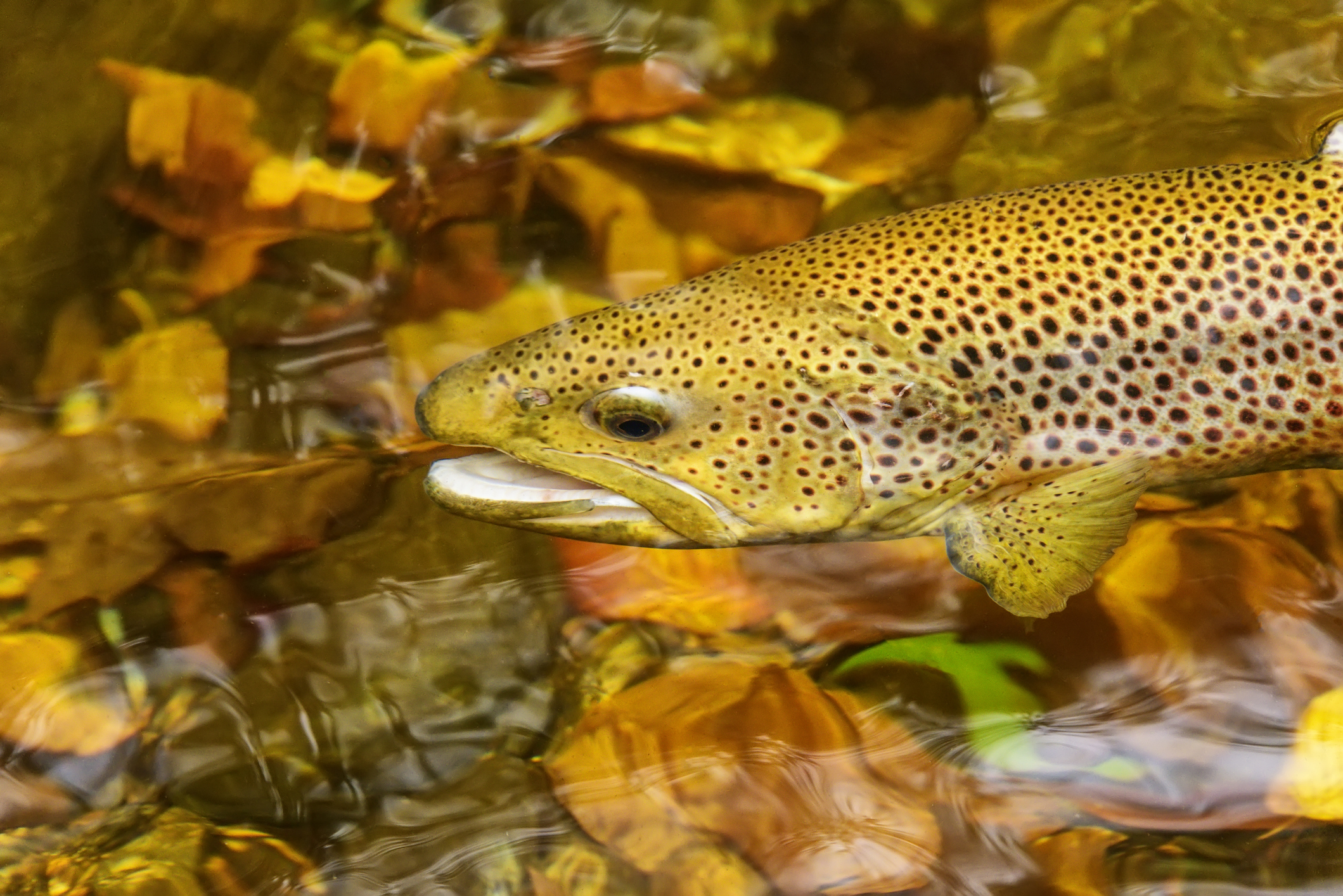
- Brook, Rainbow & Brown Trout
- Smallmouth & Largemouth Bass
- Sunfish (Bluegill, Redbreast, Green)
- Channel, Blue & Flathead Catfish
- Crappie
- Muskellunge (Pikes)
- Walleye
- Yellow Perch
- Sucker fish
Common Invertebrates:
- Eastern Tiger Swallowtail
- Monarch Butterfly
- Spicebush Swallowtail
- Eastern Bumblebee
- Carpenter Bee
- Common Green Darner Dragonfly
- Blue Dasher Dragonfly
- Fireflies (including Blue Ghost Fireflies)
- Freshwater Crayfish
- Mayfly Nymphs
- Stonefly Nymphs
- Caddisfly Larvae
- Freshwater Mussels
- Orb-Weaver Spiders
- Luna Moths
Visiting the WNC Nature Center
The WNC Nature Center is one of the best places to learn firsthand about the animals that call Western North Carolina home. Located just minutes from downtown Asheville, the center celebrated its 100 years in 2025 and is home to more than 60 species native to the Southern Appalachian region. Visitors can observe wildlife up close in naturalistic habitats, including black bears, gray and red wolves, red foxes, river otters, bobcats, birds of prey, reptiles, amphibians, and many other species that inhabit the mountains and forests of Western North Carolina. Guests can also see the Nature Center’s popular red pandas, Phoenix and BB. While not native to the region, red pandas have a fascinating Appalachian connection; an ancient relative known as Bristol’s Panda once lived in the Southern Appalachian Mountains, and the cool mountain forests of Western North Carolina closely resemble the habitat where red pandas live today in Central Asia.
The WNC Nature Center is a nonprofit and serves as both a wildlife education facility and a conservation resource, helping visitors gain a deeper appreciation for the region’s biodiversity. For locals, Buncombe County library card holders can take advantage of the library’s Zoom Pass program, which offers free admission passes to local attractions, including the Nature Center. Frequent visitors may also benefit from a WNC Nature Center membership, which provides unlimited admission and supports the center’s educational and conservation efforts.
Bottom Line
One of the many things that makes Western North Carolina such a special place to live is its incredible diversity of native wildlife, including species found nowhere else in the world. Whether you’re an avid outdoor enthusiast or simply enjoy spotting wildlife from your back porch, the natural beauty of the area is a major part of what makes life in the mountains so rewarding.
If you’re considering a move to Asheville or the surrounding mountain communities, the team at Altamont Property Group can help you find a home that fits your lifestyle. From walkable Asheville neighborhoods to secluded mountain retreats, we’re here to help you put down roots in one of the most naturally beautiful regions in the country.
Native Wildlife in WNC FAQ
What neighborhoods in Asheville have bears?
Black bears can be found throughout many Asheville neighborhoods, particularly those bordering forests, greenways, and undeveloped land. Common areas for bear sightings include Beaverdam Valley, Town Mountain, Haw Creek, Riceville, Fairview, and neighborhoods near Bent Creek. Bears are also frequently observed in communities along the Blue Ridge Parkway and near Pisgah National Forest, where abundant forest habitat provides food, shelter, and travel corridors.
Are bears in Asheville dangerous?
As Asheville continues to grow, encounters between bears and people have become increasingly common. In most cases, black bears in Asheville are not dangerous and prefer to avoid people. Residents can help reduce conflicts by practicing BearWise principles and keeping attractants properly secured.
How can homeowners safely coexist with wildlife in Asheville?
Wildlife in Asheville can become habituated to human food sources such as unsecured trash, bird feeders, and pet food. Homeowners can coexist safely with wildlife by securing or removing outdoor food sources, keeping pets supervised, and maintaining a respectful distance from wild animals. Creating wildlife-friendly landscapes with native plants can also support birds, pollinators, and other native species while reducing unnecessary conflicts with larger animals such as bears and deer.
Is the Eastern Hellbender Salamander endangered?
The Eastern Hellbender is considered a species of conservation concern throughout much of its range, including Western North Carolina. While populations still exist in WNC’s rivers and streams, habitat degradation, sedimentation, pollution, and disease have contributed to declines in many areas. Conservation efforts are ongoing to help protect this unique amphibian and its aquatic habitat.