As summer comes to a close, it’s time to start preparing for a successful school year. Whether you’re sending a child to kindergarten for the first time or helping a high school student get ready for another busy year, having a comprehensive back-to-school checklist can make the transition smoother for the whole family. Planning ahead helps reduce stress, avoid last-minute shopping trips, and ensures your student has everything they need before the first day.
If you’re new to the Asheville area or simply looking for school-specific information, be sure to check out our Buncombe County Schools Guide for enrollment information, school calendars, district resources, and helpful local insights.

School Supplies Checklist
Every school and grade level has its own supply requirements, so always refer to your child’s teacher or school-issued supply list first. However, most students will need many of the same essentials. In addition to classroom supplies, don’t forget clothing, shoes, backpacks, and other everyday gear that helps students feel prepared from day one.
Many teachers also have classroom wishlist items that students will use throughout the year, such as tissues, hand sanitizer, sanitizing wipes, and other shared supplies. If you’re able, choosing a few extra items from these lists is a thoughtful way to help support your child’s teacher and classroom.
Please note that the lists below are general back-to-school supply lists, but it’s important to check your local school’s website for specific school supply requirements for students.
Elementary School Supplies Checklist
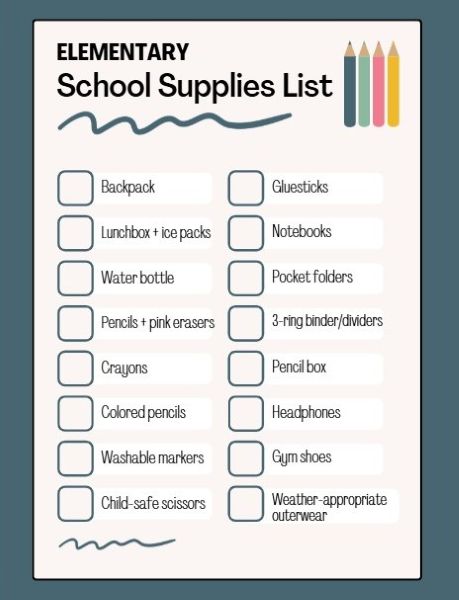
Click the image above to download the printable Elementary School Supplies Checklist (PDF).
Middle School Supplies Checklist
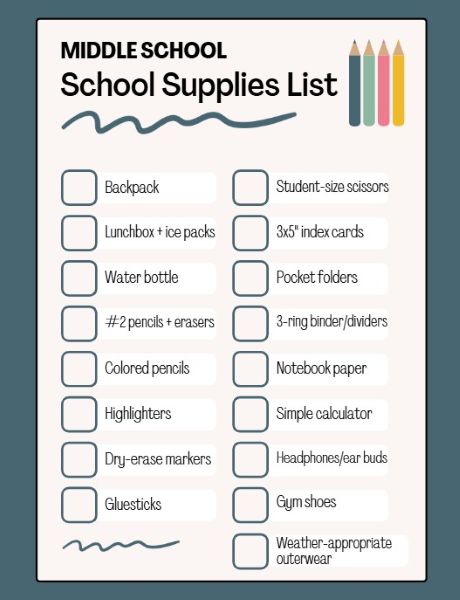
Click the image above to download the printable Middle School Supplies Checklist (PDF).
High School Supplies Checklist
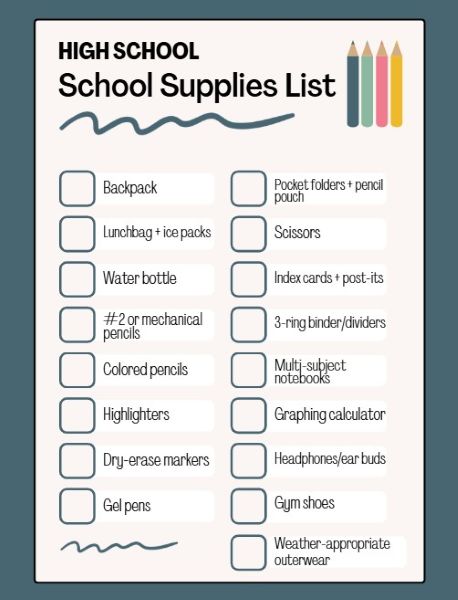
Click the image above to download the printable High School Supplies Checklist (PDF).
Documents and Planning for Back to School
Getting organized goes beyond purchasing school supplies. Before the first day arrives, take time to review paperwork, update important records, and make sure everyone in the family knows the plan. Completing these tasks early helps eliminate unnecessary stress during the first week of school and keeps your child prepared for the year ahead.
- Complete student registration or enrollment if needed
- Verify immunization and health records
- Update emergency contacts
- Review school transportation information, including bus routes or carpool schedules
- Confirm class schedules and teacher assignments
- Add important dates from the school calendar to your personal calendar
- Set up lunch accounts or meal plans
- Register for before-school or after-school programs
- Review technology requirements and student account logins
- Sign any required permission forms and complete volunteer background checks
Getting into a Back to School Routine
One of the best ways to make the transition back to school smoother is by easing into routines before classes begin. Starting these habits a week or two in advance helps children adjust gradually and makes those first mornings much less hectic.
Bedtimes & Wakeups
Begin shifting bedtime and wake-up times before school starts. Gradually moving schedules earlier by 15–20 minutes every few days helps children adjust to their school-year routine, get the sleep they need, and makes the transition to early mornings feel much easier after a summer of later nights.
Morning Routine
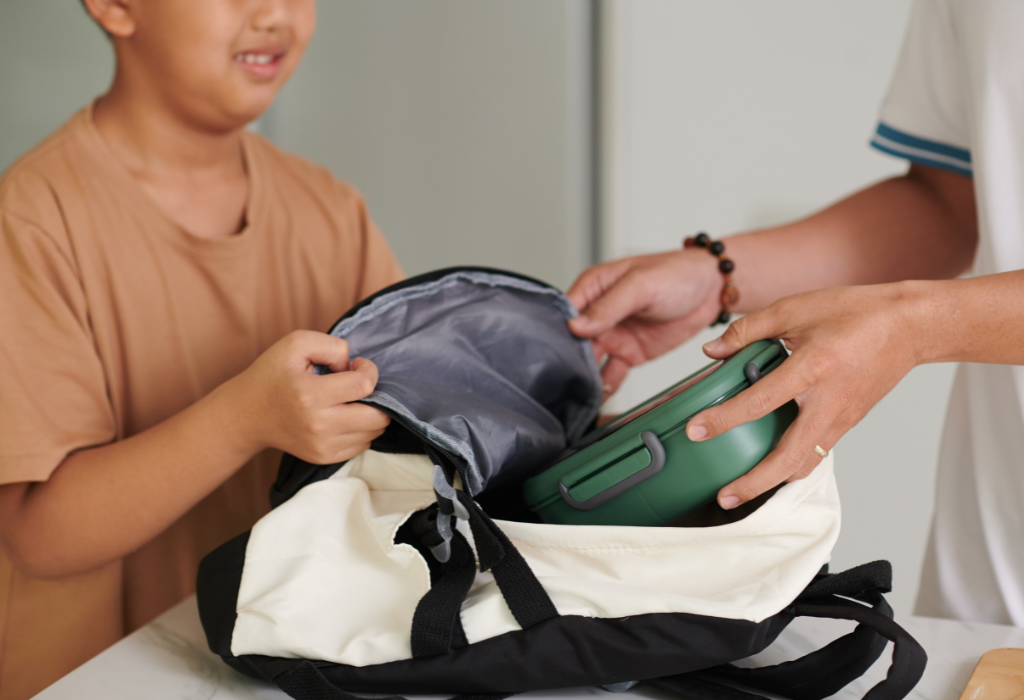
Practice your family’s morning routine before the first day. Lay out clothes the night before, pack backpacks in advance, and decide who is responsible for each morning task. A consistent routine helps everyone get out the door on time.
Homework Plan
Create a designated homework area that’s free from distractions and stocked with basic supplies. Establish a consistent homework schedule so studying becomes part of the daily routine from the beginning of the school year.
Food Planning
Prepare for busy weekdays by planning lunches, stocking healthy snacks, and creating a simple weekly dinner schedule. Check your child’s school lunch calendar so you know which days they’ll be eating school-provided lunches and which days you’ll need to pack a lunch. Meal prep, grocery planning, and a little organization can save valuable time and make the first few weeks of school feel much more manageable.
Bottom Line
A little preparation now can set the tone for a successful school year ahead. From checking off your back-to-school shopping list to creating routines that make busy mornings easier, these simple steps can help your family feel organized, confident, and ready for whatever the year brings.
At Altamont Property Group, we believe the right home is the heart of a strong community. Whether you’re looking for a neighborhood close to Asheville schools, more room for your growing family, or a place to put down roots in Western North Carolina, our team is here to guide you every step of the way.
Back to School Checklist FAQ
How important is school district location when buying a home?
School district location is often one of the biggest factors families consider when purchasing a home. Researching school district zones, academic programs, and commute times can help ensure your new home fits your family’s long-term needs.
Should I research schools before buying a home?
Yes, but don’t stop at school ratings. Review district boundaries, extracurricular programs, and transportation options, and take time to chat with local families about their experiences. Their firsthand insight can help you find a home in a community that’s the right fit for your family’s needs.
Is summer a good time to move before the new school year begins?
Summer is often the most convenient time for families to move because it allows children to settle into a new home before classes begin. It also provides time to complete enrollment, meet teachers, and establish routines before the school year starts.
What should families do if they’re moving to a new area after school starts?
Families moving during the school year should contact the new school district as early as possible, gather all required enrollment documents, and communicate with teachers to help students transition successfully. With a little planning, most children adjust quickly to a new school environment.